PPDA in football: what it says about a team's press
By Mariano David Pérez Co-founder

PPDA in football stands for passes per defensive action, and it measures how intensely a team presses: how many passes it lets the opponent play, away from its own goal, for every defensive action it makes. The lower the number, the harder the press. A PPDA of 7 means the opponent played seven passes for each attempt to win the ball back; a PPDA of 17 means they were left alone.
How is PPDA calculated?
Divide the opponent’s passes by the pressing team’s defensive actions, counting only what happens in the 60% of the pitch nearest the opponent’s goal. Colin Trainor introduced the metric in 2014 on the StatsBomb blog, counting tackles, interceptions, challenges (failed tackles) and fouls as defensive actions.
The Wyscout data glossary works through a Liverpool v Manchester United match from October 2019: United played 207 passes in that zone and Liverpool made 40 defensive actions. 207 divided by 40 gives Liverpool a PPDA of 5.2. The other way round, United finished on 17.6.
What is a high PPDA and what is a low one?
It depends on the league and the source, but there is a published reference. A Coaches’ Voice explainer on the Premier League website (February 2025), using Wyscout data for 2021/22, gives these extremes across Europe’s top five leagues:
| Team (2021/22) | PPDA | Reading |
|---|---|---|
| Barcelona | 7.26 | Lowest in the five leagues |
| Liverpool | 8.62 | Lowest in the Premier League |
| Norwich City and Troyes | 16.93 | Highest in the five leagues |
The number is not the same everywhere. Wyscout counts fouls, interceptions, defensive duels won and sliding tackles; the original definition also counts failed tackles. A team’s PPDA from one source should not be set against another team’s from a different one, exactly as with xG.
What does PPDA not tell you?
The same Premier League explainer sets out three limits:
- It does not measure whether the press worked. It counts attempts, not regains.
- It flatters dominant teams. A side that spends the match in the opponent’s half will post a low PPDA without pressing ferociously.
- It only sees actions on the ball. Team shape, cover and the player who blocks a passing lane never enter the sum.
That is why complementary measures have appeared: FIFA, for one, added pressure on the ball and forced turnovers to its metrics from the 2022 World Cup.
How does PPDA help a scout or a club?
PPDA belongs to the team, not the player, and it works as context. A forward coming from a low-PPDA side is already used to running without the ball; one coming from a low block will have to learn it, and his defensive numbers read differently. What to look at for each role is in football metrics by position.
What the number cannot see — who jumps first, who arrives late, who stops pressing after seventy minutes — gets written down by watching the match. In The Football Club that goes into the match report, inside the player’s profile and next to his statistics and your Wyscout export, if you work with one.
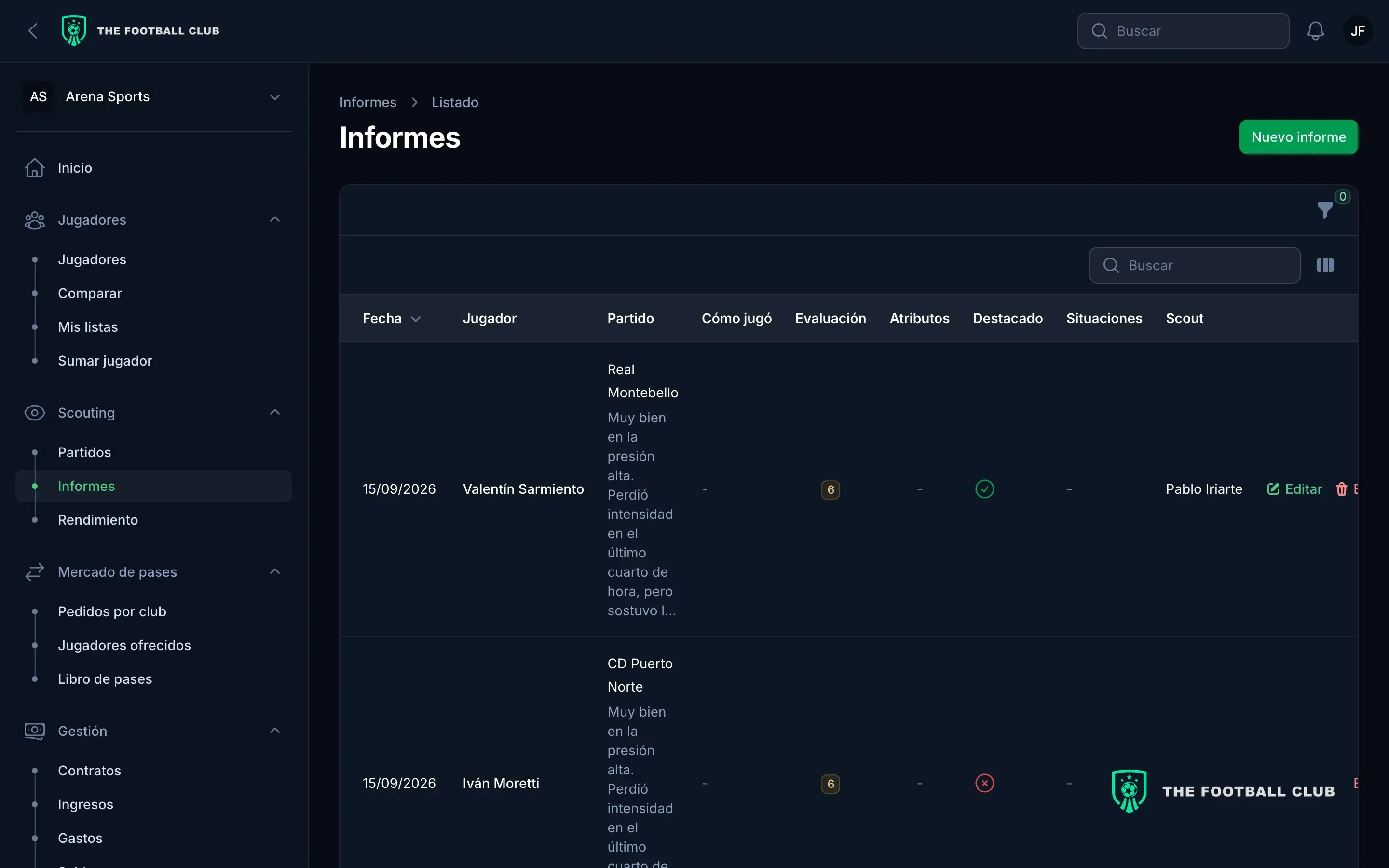
How that fits into a working week is on the match reports.
Updated November 2026.
Sources
Checked in November 2026:
- Colin Trainor, Hudl Statsbomb: Defensive metrics: measuring the intensity of a high press, 30 July 2014.
- Wyscout data glossary: PPDA (Passes per defensive action).
- Premier League and The Coaches’ Voice: Passes per defensive action: explained, February 2025.
- FIFA Training Centre: FIFA to introduce Enhanced Football Intelligence at FIFA World Cup 2022, November 2022.